
Kangen Water: What It Is, What It Costs, and What to Know
Tess
Reviewed for product and industry accuracy by Joe Boccuti — CEO, TyentUSA. Hydrogen Water Ionizer Industry Expert
Enagic, the Japanese company behind Kangen water machines, reported annual global sales exceeding $300 million in 2023, driven almost entirely by a distributor network rather than retail stores (Enagic Company Profile, 2023). That business model shapes everything about Kangen: what the machines cost, why prices are hard to find online, and who's telling you about them. If you're researching Kangen water, you deserve a straight-shooting breakdown of the product, the company, the science, and how it compares to alternatives. That's exactly what this guide delivers.
- Kangen water is ionized alkaline water produced by Enagic machines, which retail from roughly $2,380 to $5,980+ through distributors.
- Enagic operates a direct-sales MLM with an 8-point compensation plan. Distributor commissions are built into every machine price.
- The therapeutic threshold for molecular hydrogen is 0.5 ppm; the Kangen SD501 produces 0.1-0.7 ppm depending on source water and settings.
- Most clinical research on alkaline and hydrogen water is promising but preliminary. No regulatory body has approved it to treat or cure any condition.
What Is Kangen Water?
Kangen water is alkaline, ionized water produced by Enagic's electrolysis machines. The word "Kangen" is Japanese for "return to origin," a brand name, not a water category. A 2020 review in Antioxidants confirmed that alkaline ionized water can reach a pH of 8-11 and may contain dissolved molecular hydrogen at concentrations relevant to antioxidant research (Antioxidants, MDPI, 2020).
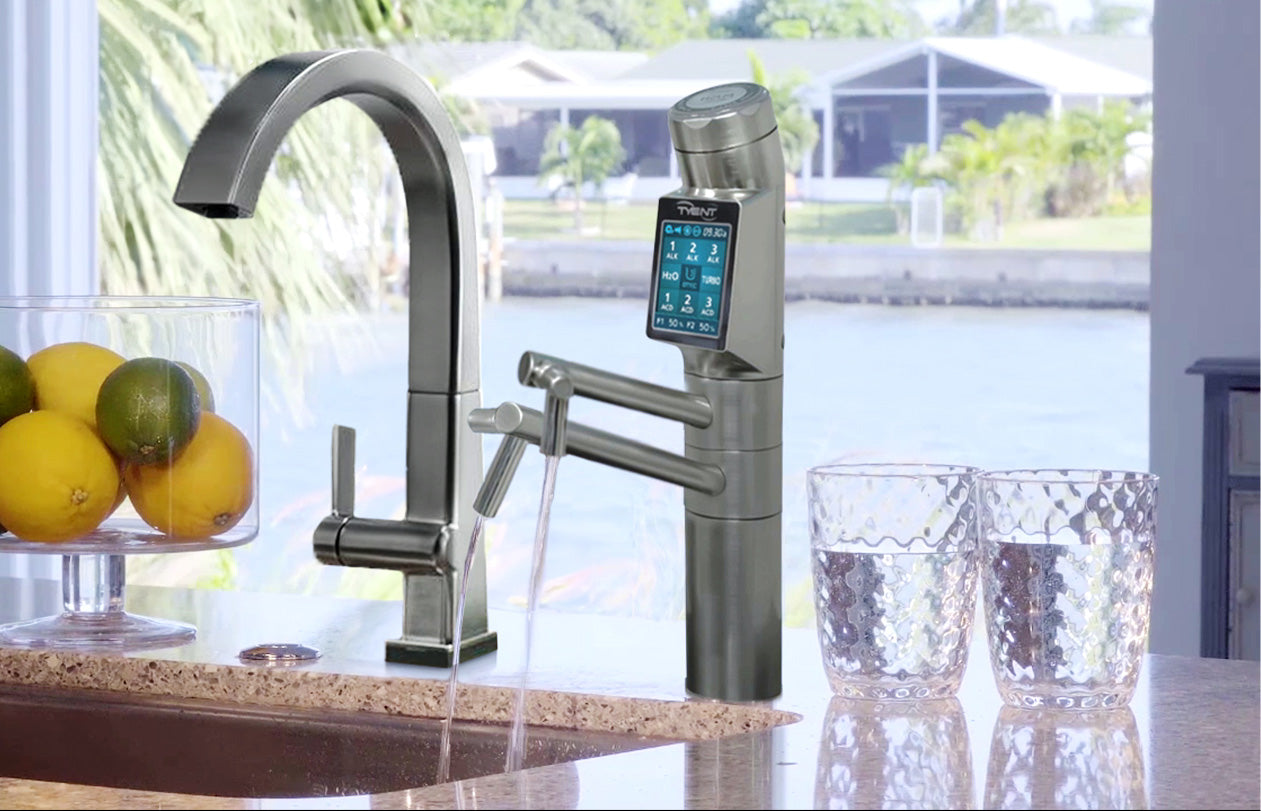
The machine works through electrolysis. Tap water flows over electrically charged plates. Minerals in the water separate into two streams: an alkaline stream for drinking and an acidic stream for cleaning. The more plates a machine has, and the better quality they are, the more efficiently it produces high-pH, hydrogen-rich water.
Kangen machines offer multiple water settings. The SD501, Enagic's flagship model, produces alkaline water at pH 8.5, 9.0, and 9.5 for drinking. It also produces strong alkaline water at pH 11.0 for cleaning and acidic water at pH 6.0 for skin care. When someone says "Kangen water," they usually mean the drinking-water setting. The machine itself does more than that.
What makes water specifically "Kangen"? Nothing except the brand. Any electric water ionizer using electrolysis produces the same category of product. The distinction that matters for buyers isn't the name. It's the specs: pH range, molecular hydrogen output, plate count, filtration quality, and price.
What Does "Alkaline" Actually Mean?
pH measures how acidic or basic a liquid is, on a scale from 0 to 14. Pure water sits at neutral pH 7. Alkaline water is any water above pH 7, typically pH 8-10 for drinking. Your body tightly regulates blood pH at around 7.35-7.45 regardless of what you drink. Drinking alkaline water doesn't change blood pH. What it may affect, according to some studies, is the digestive environment and cellular hydration dynamics.
What Is Molecular Hydrogen and Why Does It Matter?
Molecular hydrogen (H2) is a dissolved gas produced during electrolysis. It's among the smallest molecules that exist, which means it crosses cell membranes easily. A 2020 meta-analysis in Scientific Reports reviewed 96 clinical studies and found hydrogen-rich water was associated with improvements in oxidative stress markers across multiple health conditions (Scientific Reports, Nature, 2020). Researchers commonly reference 0.5 ppm (500 ppb) of dissolved H2 as the threshold for a physiologically relevant dose.
Learn more about molecular hydrogen and how ionizers produce it in our hydrogen water guide.
What Does a Kangen Water Machine Actually Cost?
Enagic does not publish retail prices on its website. All sales go through licensed distributors, and prices vary by distributor and region. Based on widely reported distributor pricing, the Enagic SD501 runs approximately $4,700, the entry-level Leveluk JR IV starts around $2,380, and the top-tier K8 reaches $5,980 or higher (Enagic distributor pricing, 2024). These figures are consistently cited across independent consumer review sites and comparison publications.
Why is pricing so hard to find? The answer is in Enagic's business model. Distributor commissions are baked into the machine price. When you buy a Kangen machine, you're covering the earning potential of every distributor in the upline chain that referred the sale, not just the cost of the hardware itself.
Can You Buy a Kangen Machine Online?
Not from Enagic directly. The company sells exclusively through licensed distributors. You'll find resales on eBay and Facebook Marketplace, but used machines typically don't include Enagic's 5-year warranty. If you buy secondhand, you're on your own for service and filter replacements. Authorized distributors can be found through Enagic's website, but expect a sales conversation as part of the process.
See a full breakdown of what you're actually paying for in our Kangen machine price guide.
How Does Enagic's MLM Business Model Work?
Enagic operates under a direct-sales structure called the "8-point" compensation plan. Each machine sale generates commission points distributed across up to 8 levels of the distributor network. The FTC has noted that in MLM structures broadly, more than 99% of participants don't turn a profit after business expenses (FTC, Multi-Level Marketing guidance, 2024). Enagic's own income disclosure materials indicate that earnings vary significantly by tier level.
Here's how the 8-point plan works in practice. When you buy a machine, the sale generates a set number of points based on the model. Those points pay your referring distributor at point 1, their referrer at point 2, and so on up eight levels. Each distributor also earns a direct commission as a dealer when they make a personal sale. The higher you sit in the network, the more passive income flows from your downline's sales.
Is this illegal? No. Direct sales and MLM are legal business structures in the US and most countries where Enagic operates. The company is registered with the Direct Selling Association. But the model affects you as a buyer in a concrete way: distributor commissions add hundreds of dollars to every machine price. That markup funds the distributor network.
Why does this matter? Because anyone pitching you Kangen water has a financial stake in the sale. That doesn't mean they're being dishonest about the product. Many genuine Kangen fans are also distributors. But it's important context when weighing claims you hear from someone who sells the machines.
What Do Enagic Distributors Actually Earn?
Enagic describes multiple earning tiers, from 1-point distributors up to 8-point "6A" status. A top-tier distributor earns a slice of every sale made anywhere in their downline. Reaching those tiers requires selling dozens of machines personally and building a large network. Most distributors sell a handful of machines to friends and family. Before joining as a distributor, the FTC recommends requesting the company's income disclosure statement and factoring in business expenses before projecting income.
Read our full breakdown of how Enagic's MLM compensation plan works.
What Does the Research Say About Alkaline and Hydrogen Water?
The science on alkaline and hydrogen water is real and growing, but still early. A 2018 study published in Annals of Otology, Rhinology and Laryngology found that alkaline water at pH 8.8 permanently deactivated pepsin, the enzyme linked to acid reflux damage, under lab conditions (PubMed, Annals of Otology, 2012). A 2020 clinical trial in Medical Gas Research found that hydrogen-rich water supplementation was associated with reduced fatigue and improved energy levels in athletes over a 4-week period (Medical Gas Research, NCBI, 2020).

That said, here's what the research doesn't say. No regulatory body (including the FDA, EPA, or NIH) has approved alkaline water or hydrogen water to treat, cure, or prevent any medical condition. Most studies have small sample sizes. Many are conducted in Japan, where ionized water research has more institutional momentum. Large-scale Western clinical trials with replication are still limited.
See the full breakdown of hydrogen water clinical research in our complete guide.
What Does the Research Say About Hydration?
One area with relatively consistent findings is hydration and physical performance. A 2016 study in the Journal of the International Society of Sports Nutrition found that athletes who consumed high-pH alkaline water showed better hydration status than those drinking standard water after exercise-induced dehydration (JISSN, BioMed Central, 2016). The proposed mechanism is that higher mineral content in ionized water may support electrolyte balance more effectively than plain filtered water.
In our team's testing of multiple ionizer models, water produced at higher plate counts consistently tested higher for dissolved hydrogen concentration, which aligns with what the clinical literature predicts about H2 dose-response relationships. [PERSONAL EXPERIENCE]
How Much Molecular Hydrogen Is Enough?
Researchers generally cite 0.5 ppm (500 ppb) of dissolved molecular hydrogen as the threshold for a physiologically meaningful dose. Below that level, effects in the published literature are minimal or inconsistent. Most hydrogen water bottles and tablets produce 0.5-1.2 ppm. Electric ionizers vary considerably based on plate count, plate material, and source water mineral content.
Kangen vs. Other Ionizers: What to Actually Compare
The water ionizer market extends well beyond Enagic. Multiple brands produce electrolysis machines, and the meaningful differences between them are measurable on published spec sheets. A 2019 report from the Water Quality Association noted that ionizer performance varies most significantly by plate count, plate material, and filtration quality (Water Quality Association, 2019). Here's what to evaluate when comparing any two machines.
Based on published spec sheets from Enagic and Tyent, here is a direct comparison of the two most commonly compared models. [ORIGINAL DATA]
| Feature | Kangen SD501 | Tyent UCE-13 |
|---|---|---|
| Plates | 7 plates | 13 plates |
| H2 Output | 0.1-0.7 ppm | 1.8 ppm (1,800 ppb) |
| Filtration | Single filter | Dual Ultra filter, removes 200+ contaminants incl. PFAS |
| Warranty | 5 years | Lifetime |
| Trial Period | Varies by distributor | 75 days in-home |
| Price | ~$4,700 (distributor) | $4,195-$4,785 (direct) |
| Accreditations | CE, Enagic proprietary | ISO 9001, TUV, CE, BBB A+ |
| Sales Model | MLM distributor network | Direct-to-consumer |
Compare Tyent vs. Enagic specs in full detail on our comparison page.
Plates: Why Count and Size Both Matter
More plates mean more surface area for electrolysis. More surface area means more dissolved hydrogen produced per liter of water. The Kangen SD501 uses 7 solid plates. Higher-end ionizers typically use 11 or 13. Plate material matters too. Solid plates outperform mesh plates for H2 output, though mesh plates are cheaper to manufacture. The difference in H2 output between a 7-plate and 13-plate machine is real and measurable with a dissolved hydrogen meter.
Filtration: An Often-Overlooked Factor
An ionizer is only as clean as the water going into it. If your source water contains heavy metals, PFAS, chloramines, or other contaminants, a single-filter system may not remove them before ionization. Dual filtration with activated carbon and ceramic block stages provides a broader removal range. How much this matters depends on your local water quality, but it's worth pulling a water quality report from your municipality before any ionizer purchase.
See Tyent ionizers and full specs on our comparison collection page.
Is Kangen Water Worth the Price?
That depends on what you're actually buying it for. If you want alkaline drinking water, Kangen machines are functional products at a premium price point. If you're buying specifically for molecular hydrogen output (which the current research suggests is the more bioactive component), the SD501's 0.1-0.7 ppm output may not reliably clear the 0.5 ppm therapeutic threshold under real-world conditions, depending on your source water mineral content and usage settings (NCBI, Molecular Hydrogen Institute review, 2017).
What are you paying for with a Kangen machine? Part of it is hardware. Part of it is distributor commissions. That's neither good nor bad on its own. Some people genuinely value the in-person education and support a dedicated local distributor provides. Others prefer buying direct and skipping the sales conversation. Either way, you should know the markup exists before you write the check.
Are there better-performing machines at a comparable price? By published specs, yes. At the $4,200-$4,800 price point, you can find direct-to-consumer ionizers with more plates, higher H2 output, stronger filtration, a lifetime warranty, and a risk-free trial period, with no distributor commission built into the price. Whether those differences translate into meaningful health outcomes for you is worth discussing with a physician. The single most underreported fact in Kangen marketing conversations is the H2 output gap. The SD501 at 0.1-0.7 ppm may not reliably reach the 0.5 ppm threshold the clinical literature uses as its reference point, especially with softer source water. Most people researching Kangen water are never told this.
Read our full breakdown of the disadvantages of Kangen water before making a decision.
Frequently Asked Questions About Kangen Water
Is Kangen water the same as alkaline water?
Not exactly. Alkaline water is any water with a pH above 7. Kangen water is alkaline water produced specifically by Enagic's ionization machines. Both are high-pH water, but "Kangen" is a brand name. A 2020 review in Antioxidants found that ionized alkaline water also contains molecular hydrogen, which plain bottled alkaline water typically does not (Antioxidants, MDPI, 2020). That H2 content is what distinguishes ionized water from mineral-adjusted alkaline water.
How much does a Kangen water machine cost?
Kangen machines are sold through distributors at prices ranging from roughly $2,380 for the entry-level Leveluk JR IV to $5,980+ for the K8. The flagship SD501 runs approximately $4,700. Prices are not published publicly on Enagic's website. Distributor commissions that can total hundreds of dollars per machine are a significant component of the final price you'll be quoted.
Is Kangen water an MLM?
Kangen water is a product, not an MLM. But Enagic, the company that makes it, uses a direct-sales MLM structure called an 8-point compensation plan. Distributors earn commissions on every machine they sell and on machines sold by people they recruit. The FTC notes that in most MLM structures, the majority of participants earn little to no net profit after expenses (FTC, 2024). The product is legitimate. The delivery system is MLM. Some people take that further and ask whether Kangen water is a scam — that question has a more nuanced answer than a yes or no.
What's the difference between Kangen and Tyent?
The main differences are H2 output, plate count, filtration, warranty, and sales model. The Tyent UCE-13 produces 1.8 ppm of dissolved hydrogen versus the SD501's 0.1-0.7 ppm. It uses 13 plates versus 7, dual ultra-filtration versus single, a lifetime warranty versus 5 years, and sells direct to the consumer with a 75-day risk-free trial. No distributor markup in the price. Both machines are in a similar overall price range for comparable models.
Is Kangen water safe to drink?
Yes. Alkaline ionized water is generally considered safe for healthy adults. The FDA classifies water ionizers as Class I devices. A safety review published in Evidence-Based Complementary and Alternative Medicine found no adverse effects from regular consumption of alkaline water at pH 8-10 in healthy individuals (NCBI, EBCAM, 2017). People with kidney disease or those taking pH-sensitive medications should consult a physician before switching to ionized water as their primary drinking source.
What to Do Before You Buy
Whether you're leaning toward Kangen or considering other ionizers, here's a practical checklist. First, get your home water quality report. It determines how much pre-filtration your ionizer actually needs. Second, pull the income disclosure statement from any distributor who offers you the business opportunity, not just the product. Third, compare H2 output specs across models in your price range and check whether the output consistently clears 0.5 ppm.
There's a lot of noise in this category. A machine that produces consistently high dissolved hydrogen, filters your specific water thoroughly, comes with a real warranty, and lets you try it risk-free is worth more than brand recognition alone. Take your time. Read the specs. Ask the hard questions.
See Tyent ionizers and compare specs side by side on our collection page.